
Sperm freezing is a fertility preservation procedure where a man’s sperm is collected, frozen, and stored for future use. Frozen sperm can later be used for fertility treatments such as IUI, IVF, or ICSI. Sperm freezing is commonly recommended before medical treatments, surgeries, fertility treatment, or when pregnancy is planned later. Sperm freezing, also known as sperm cryopreservation, is a reliable and widely used fertility preservation option for men who want to protect their ability to conceive in the future. Advances in laboratory techniques allow sperm to be safely stored for long periods and used later in assisted reproductive treatments.
Sperm freezing plays an important role in modern fertility treatments, especially for men facing medical conditions, fertility decline, or life circumstances that may affect future sperm quality. This page explains sperm freezing in detail, including who should consider it, how the procedure works, how frozen sperm is used later, and what factors influence success.
Sperm freezing is the process of collecting semen, processing it in a laboratory, and freezing the sperm under controlled conditions for future use.
Frozen sperm can later be thawed and used for:
The semen sample of the male partner is processed to remove the debris and separate the fastest moving sperms which are then frozen in liquid nitrogen for future use.
The semen sample of the male partner is processed to remove the debris and separate the fastest moving sperms which are then frozen in liquid nitrogen for future use.
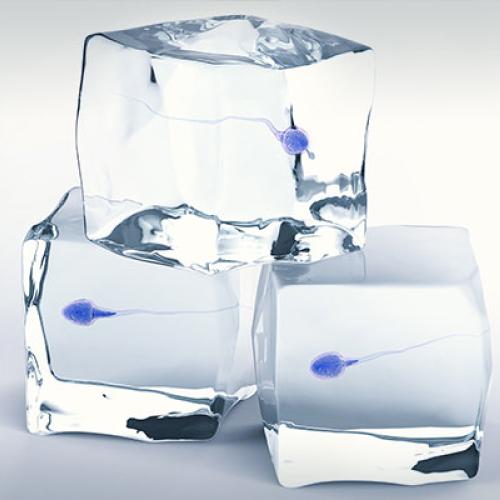
Sperm freezing may be recommended in the following situations:
Men undergoing treatments that may affect fertility, such as:
Sperm freezing may be advised before:
Men with:
Men who wish to delay parenthood for personal, professional, or lifestyle reasons may choose sperm freezing as a proactive step.
Sperm freezing may be done before IVF or ICSI, especially when:
When pregnancy is planned, frozen sperm can be thawed and used in fertility treatment.
Used when sperm quality and female fertility factors are suitable.
Recommended when fertility issues are more complex.
Often used when sperm count or motility is very low. A single sperm is injected directly into an egg.
Frozen sperm can be stored safely for many years under proper laboratory conditions. Storage duration depends on:
Doctors can guide patients on long-term storage options.
Sperm freezing offers several advantages:
Preserves fertility before medical treatment
Provides reproductive flexibility
Allows future family planning
Reduces pressure around immediate conception
Supports IVF and ICSI planning
Sperm freezing outcomes depend on:
Higher-quality sperm tends to survive freezing and thawing better.
Experienced labs with advanced cryopreservation techniques improve outcomes.
ICSI allows even very small numbers of sperm to be used successfully.
Both are fertility preservation options, but they differ:
Aspect | Sperm Freezing | Egg Freezing |
Who it’s for | Men | Women |
Complexity | Simple | More complex |
Requires medication | No | Yes |
Future use | IUI / IVF / ICSI | IVF / ICSI |
Sperm freezing is considered safe and widely used in fertility medicine. The freezing process does not increase genetic risk when performed under proper medical and laboratory standards.
Doctors ensure:
Sperm freezing is considered safe and widely used in fertility medicine. The freezing process does not increase genetic risk when performed under proper medical and laboratory standards.
Doctors ensure:
Sperm freezing is a simple, safe, and effective way for men to preserve fertility for the future. Whether done before medical treatment, surgery, fertility treatment, or delayed parenthood, sperm freezing provides flexibility and peace of mind.
A fertility specialist can guide men through evaluation, sperm freezing options, and how frozen sperm can later be used through IUI, IVF, or ICSI based on individual fertility goals.
It is essential to do a serology test before going ahead with freezing the semen sample.
He should be free from any active urogenital infection
Semen should be collected by masturbating into a wide-mouthed sterile container. Due to concerns with chances of infection, it should not be collected by sex and withdrawal method.
This is a fairly common problem as it is not always possible to masturbate on demand, especially in a bathroom or hospital setting where there is a lack of privacy. Aids such as porn magazines, porn videos, use of a vibrator, or partner-assisted masturbation in a private room may be tried. If it still fails to give results, we advise the couple to bring the sample from home provided the hospital is reachable within 30 min of collection. In such cases, an additional consent stating that the sample brought from home is the husband’s sample should be signed by both the partners.
There is no set time limit for the storage of sperm but the usual time frame stipulated is a period of ten years. Sperms have been reported to have been used successfully even 40 years after storage!
Semen parameters prior to freezing will determine the parameters post thawing. Sperm may undergo some damage during the freezing and thawing process due to osmotic or oxidative stress as well as the formation of intracellular ice crystals, which in turn may reduce the number of functionally normal sperms. The process of cryopreservation must hence be carefully controlled to minimize the risk of damage. One recent study reported that about 80% of sperms may survive the thaw.
Sperm can be stored for the purpose of donation only in ART banks registered under the provisions of this act. Sperm can be donated only by a male in the age group of 21 to 55 years. It is stored after testing the person for diseases outlined in the guidelines. Sperm donated by one person can be used for only one commissioning couple in a lifetime and not more.
The number of samples we need to freeze will vary from person to person depending upon the reason for which it is done, the semen parameters, the treatment proposed as well as the family-building goals of the couple. One semen sample may give up to four vials of sperm of average counts. One vial is used for one IUI attempt typically. But for IVF/ICSI, as even one vial may contain millions of sperms, even one vial should be sufficient.
The usual time period we collect a sample is a sex-free or ejaculation-free gap of 3 to 5 days, so samples can be collected with a gap of few days between them. But having said that, it can be collected at shorter intervals also if time is of concern, as in starting treatment for cancer.
No. Sperm freezing usually involves semen collection, which is painless.
Yes. Frozen sperm can remain viable for long periods when stored correctly.
When used with IVF or ICSI, frozen sperm can result in successful pregnancies similar to fresh sperm.
Doctors may recommend freezing sperm before IVF or ICSI as a precaution.