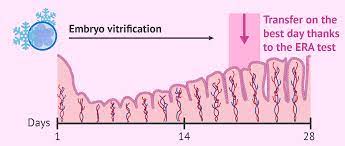
ERA (Endometrial Receptivity Analysis) is a diagnostic test used to determine the optimal timing for embryo transfer during IVF. The test analyzes gene expression in the uterine lining to identify the most receptive period for implantation, helping doctors personalize embryo transfer timing.
Successful pregnancy through IVF treatment depends not only on embryo quality but also on the timing of embryo transfer. Even healthy embryos may fail to implant if transferred when the uterus is not receptive.
To address this challenge, fertility specialists may recommend the ERA test, a diagnostic procedure designed to identify the optimal implantation window. This test helps doctors determine the precise timing when the uterine lining is most receptive to an embryo.
Understanding the ERA test can help patients undergoing IVF, particularly those who have experienced repeated implantation failure, explore more personalized fertility treatment options.
What Is an ERA Test?
The ERA test (Endometrial Receptivity Analysis) evaluates whether the uterine lining is ready for embryo implantation.
The test examines the activity of specific genes in the endometrium (uterine lining). These genes indicate whether the lining is:
- Receptive (ready for implantation)
- Pre-receptive (too early)
- Post-receptive (too late)
By analyzing this information, doctors can determine the most appropriate time for embryo transfer.
Why Is the ERA Test Done?
The ERA test is mainly recommended to improve embryo transfer timing during IVF.
Doctors may recommend ERA when:
- IVF cycles have failed despite good-quality embryos
- Patients experience repeated implantation failure
- There is suspicion that the implantation window may be displaced
- Doctors want to personalize embryo transfer timing
This test helps optimize treatment strategies for better IVF outcomes.
When Is the ERA Test Recommended?
ERA testing is usually recommended for patients who:
- Have experienced multiple failed IVF cycles
- Have good-quality embryos but implantation does not occur
- Have unexplained infertility
- Need personalized embryo transfer timing
The test is not required for every IVF patient but may be useful in specific clinical situations.
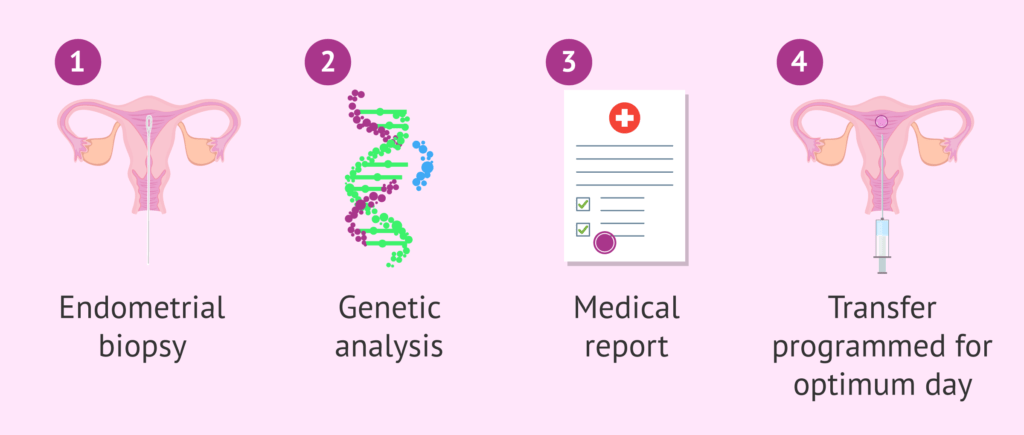
ERA Test Procedure: Step-by-Step
Step 1: Preparing the Uterine Lining
The patient undergoes a mock cycle similar to an IVF preparation cycle. Hormonal medications are used to prepare the uterine lining.
Step 2: Endometrial Biopsy
A small sample of tissue from the uterine lining is collected using a thin catheter.
The biopsy procedure usually takes only a few minutes.
Step 3: Genetic Analysis
The tissue sample is sent to a specialized laboratory where gene expression related to implantation is analyzed.
Step 4: Interpreting Results
The results determine whether the uterine lining is:
- Receptive – embryo transfer can be done at the standard time
- Pre-receptive – embryo transfer should be delayed
- Post-receptive – embryo transfer should be earlier
Doctors use this information to personalize the embryo transfer timing.
How ERA Helps Improve IVF Treatment
ERA testing supports personalized fertility care by:
- Identifying the optimal implantation window
- Helping schedule frozen embryo transfer at the most receptive time
- Reducing uncertainty in cases of repeated IVF failure
By adjusting the timing of embryo transfer, doctors aim to improve implantation potential.
Who May Benefit Most from ERA Testing?
ERA testing may be useful for patients who:
- Have experienced repeated IVF implantation failure
- Have normal uterine imaging but failed transfers
- Have high-quality embryos but no successful pregnancy
- Require personalized embryo transfer timing
Your fertility specialist will determine whether ERA testing is appropriate based on your treatment history.
Is the ERA Test Painful?
The ERA biopsy procedure may cause mild discomfort similar to menstrual cramps. The discomfort typically lasts only a short time and resolves quickly.
Most patients are able to resume normal activities shortly after the test.
Risks and Safety
The ERA test is generally safe. Possible side effects may include:
- Mild cramping
- Light spotting
- Rare infection
Doctors provide instructions to minimize these risks.
ERA Test vs Other Fertility Tests
Different diagnostic tests evaluate different aspects of fertility.
Test | Purpose |
HSG | Detect tubal blockage |
SSG | Evaluate fallopian tubes |
Hysteroscopy | Examine uterine cavity |
ERA Test | Identify optimal implantation timing |
Each test provides unique information used to guide fertility treatment.
Does the ERA Test Guarantee Pregnancy?
No fertility test can guarantee pregnancy. The ERA test simply helps identify the most receptive time for embryo transfer.
Success still depends on several factors including:
- Embryo quality
- Maternal age
- Uterine health
- Overall fertility conditions